
Understanding Space Weather: Its Impact on Our Lives

Updated: Jan 5
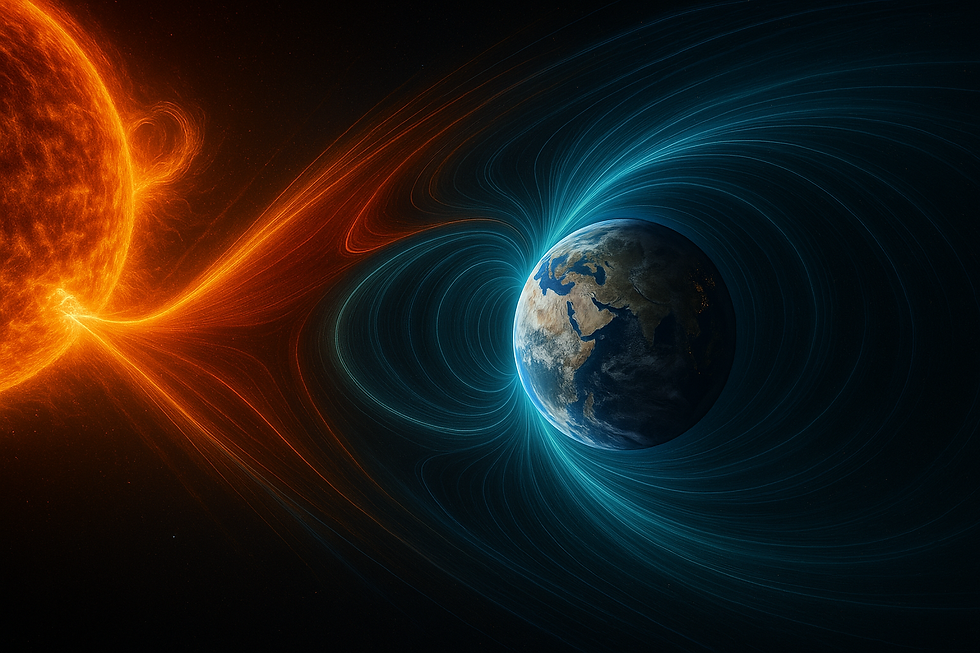
Space weather refers to the environmental conditions in space as influenced by solar activity. The sun emits energy in the form of solar radiation, which interacts with the Earth's magnetic field and atmosphere. This can lead to phenomena such as solar flares, coronal mass ejections, and geomagnetic storms. Understanding space weather is vital for predicting these events and mitigating their effects on technology and infrastructure.

Why Space Weather Matters
In today's technology-driven world, the impact of space weather cannot be overstated. Events like solar storms can disrupt GPS signals, affect radio communications, and even damage satellites. A strong enough geomagnetic storm could pose risks to power grid stability, resulting in widespread blackouts. Moreover, astronauts in space are exposed to increased radiation during significant solar events, making space weather a critical consideration for crewed missions.
The National Oceanic and Atmospheric Administration (NOAA) and other organizations continuously monitor solar activity to provide forecasts and alerts. This predictive capability enhances our ability to prepare for space weather effects and reduce risks.
Recent Developments in Space Weather
One significant recent development in space weather is the increased frequency of solar activity as we approach the solar maximum, expected in 2025. Solar maximum is a period of heightened solar activity that occurs approximately every 11 years as part of the solar cycle. This cycle features more solar flares and coronal mass ejections, which can lead to more pronounced space weather effects on Earth.
Notable Events: Solar Flares and Coronal Mass Ejections
In the past few months, there have been several noteworthy solar flares recorded. One solar flare in particular, classified as an X-class flare, erupted on September 29, 2023. This was one of the most potent flares observed in the current solar cycle.
X-class flares are the most intense type of solar flares, and they can cause radio blackouts on the sunlit side of the Earth. The flare led to increased geomagnetic activity, which can provide stunning auroras in lower latitudes.

Another event of interest was a coronal mass ejection that occurred shortly after the September flare. This massive burst of solar wind and magnetic fields rose above the solar corona or released into space. The CME caused moderate geomagnetic storms upon reaching Earth, resulting in spectacular auroras seen in various locations across the globe.
The Science Behind Solar Activity
Understanding the science behind solar activity helps us appreciate why these events occur and their potential effects. The sun has an internal magnetic dynamo that generates magnetic fields through convection. Sunspots, dark patches on the sun’s surface, are areas of intense magnetic activity.
These sunspots can lead to solar flares and CMEs as magnetic energy builds up and is released. Flare classification ranges from A-class (smallest) to X-class (largest), with X-class flares being capable of causing significant disruptions on Earth.
Following the September events, scientists are analyzing data to understand the underlying mechanisms better. This research is crucial for enhancing predictive models and improving our response capabilities during strong solar activity.
Preparing for Space Weather Impacts
Given the potential effects of space weather, it is essential for communities, businesses, and governments to prepare adequately. Here are a few actionable recommendations to mitigate risks associated with space weather:
Stay Informed: Following space weather news from reliable sources can help you stay on top of any developing situations. Websites like the NOAA's Space Weather Prediction Center provide regular updates.
Review Emergency Plans: Businesses and communities should evaluate their emergency response plans related to technology outages or power disruptions caused by solar activity.
Invest in Protective Measures: For industries directly impacted by space weather, such as telecommunications and energy, investing in protective technology like surge protectors and backup systems can aid in resilience.
Public Education: Awareness campaigns can help educate the general public about space weather and its impacts. Understanding how solar activity affects daily life can foster greater preparedness at an individual and community level.
The Future of Space Weather Observations
The future of space weather observation looks promising with advancements in satellite technology. New missions, such as the European Space Agency's Solar Orbiter, aim to get closer to the sun and provide unprecedented data on solar activity.
Expect ongoing developments in our understanding of solar behavior and its influence on Earth. Researchers anticipate discovering new patterns that could enhance forecasting abilities and reduce vulnerabilities to solar storms.

Final Thoughts on Space Weather
The significance of space weather is becoming increasingly apparent as our reliance on technology grows. Recent solar activity highlights the necessity of understanding the sun's behavior and the corresponding impacts on our systems. As we venture further into the cosmos, knowledge about space weather will become crucial in protecting our infrastructure and ensuring safety during human exploration of space.
For those looking to delve deeper, staying updated on the latest space weather news is crucial. Consider following reputable organizations like the NOAA and ESA for consistent updates and educational resources on this fascinating topic.
In conclusion, understanding space weather is not just for scientists. It affects everyone. By staying informed and prepared, we can mitigate its impacts on our daily lives.


The way solar flares interact with our magnetic field is fascinating, especially how a single CME can disrupt everything from GPS to power grids. I've been tracking real-time data on this through a great tool that visualizes geomagnetic storm intensity. https://spheroz.com
It’s wild to think that a solar flare can disrupt GPS and power grids right here on Earth. I’ve been tracking geomagnetic storms lately, and this breakdown of CMEs really helps put the chaos in perspective—check out the live data I’ve been using. https://revid-ai.com
The way solar flares and CMEs can distort Earth's magnetic field is genuinely fascinating, especially how that translates into real-world disruptions like GPS errors. I've been tracking these events more closely since a recent storm, and I've found a reliable daily forecast tool that helps me plan around potential tech glitches—check out https://image-to-stl.com
The part about solar flares and CMEs messing with Earth's magnetic field really hits home—our GPS and power grids are way more vulnerable than most people realize. I've been tracking this stuff daily over at https://ai-video-maker.net
The point about PNT services anchoring grid synchronisation really hits home—most people don’t realize how much of our daily reliability depends on that timing signal. I’ve been digging into this exact angle lately, and a great resource I found breaks it down further. https://image-to-3d.org